“When we think of the past it’s the beautiful things we pick out. We want to believe it was all like that.”
― Margaret Atwood, The Handmaid’s Tale
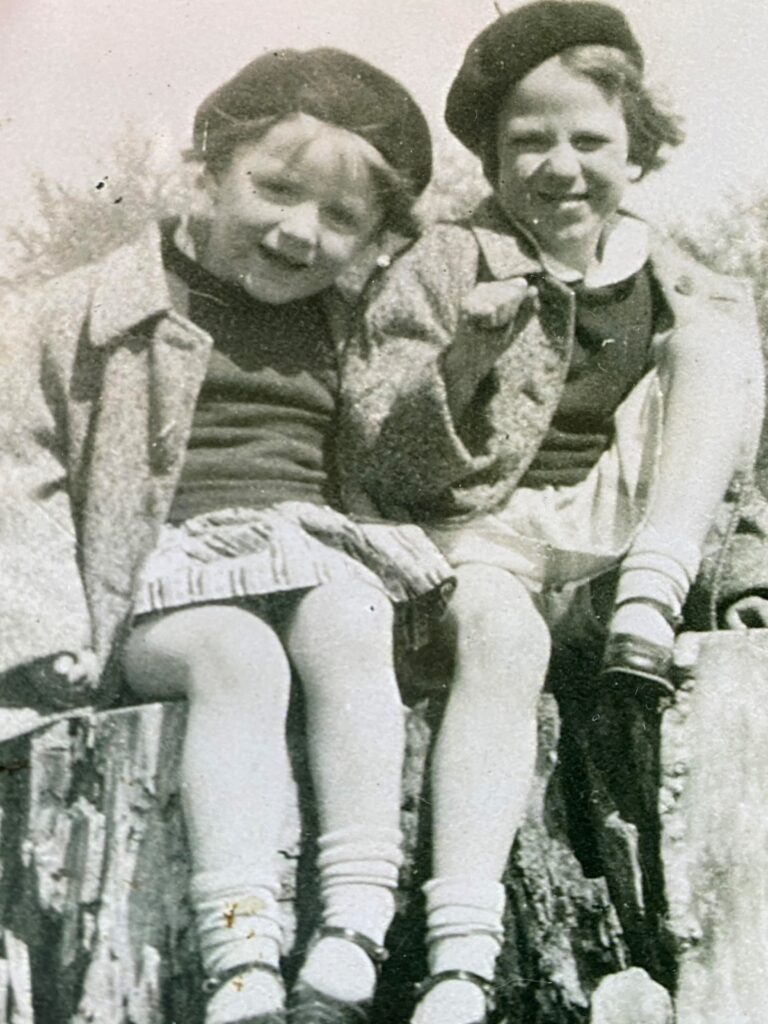
Gwen Briscoe (left), the youngest in the family, sitting next to her second youngest sister Beth on a wooden stump in Arnprior, Ontario, Canada.
A Bit About Mom (Gwenneth Ann Briscoe) …
Mom was born in Canada in the small town of Arnprior less than one hour west of Ottawa, the nation’s capital, sharing the banks of the Ottawa River. The youngest child of six (Johnny, Helen, Doug, Rita, Beth, and Gwen) to John & Daisy Frances Briscoe on January 5th, 1939. Eight months prior to Canada entering World War II.
While Canada was engaged in the war, mom was diagnosed with polio and fighting her own life’s battle. Together, family and friends took shifts moving her limbs side to side and up and down day and night involuntarily to maintain motor movement. Frances even lay her in a dresser drawer to sleep so she would be well protected. Over some very delicate months mom was spared from this infantile paralysis.
Perspective: Polio crippled tens of thousands of Canadians until the Salk vaccine was introduced in 1955. Polio (often referred to as ‘infantile paralysis’) can strike people at any age but children under age five are most at risk. It is an infectious disease caused by a virus.
In 1910 there was a first outbreak in Hamilton, Ontario when a little girl was taken to a hospital thinking she died of rabies later discovering it was polio. Following this diagnosis, the sick were quarantined, schools were closed, and children were restricted from travelling or even going to movie theaters. Years later it was realized that this did not do one thing to prevent polio’s spread.
An estimated 11,000 people in Canada were left paralyzed by polio between 1949-1954. Sadly, some people who recovered from paralytic polio in the past may later experience post-polio syndrome (PPS). This nervous system disorder can appear 15-40 years later after the original illness, bringing progressive muscle weakness, severe fatigue, and muscle and joint pain.
There is still no cure for polio. But polio vaccines over the life of an individual can protect them from getting polio.
Canadian Public Health Association. Resources and Services. History of Public Health. ‘The Story of Polio’
Miraculously, mom avoided a crippled childhood. But truth be known I believe she would have made her life much of the same, waking early each day in search of service for others, tending the yard, staying healthy, and eating well. Polio would have only magnified her benevolence.
Her memories were joyful recalling the love of her mother and her father. Mom and her siblings had many dolls sewn together by Frances from left over fabric along with an incredible dollhouse that added to an imaginative upbringing. When old enough to reach the pedals of the family tricycle mom’s eldest sister, Helen, took time to teach her how to ride the trike. Likely, it was the beginning to mom’s lifelong passion for physical activity and adventure.
With so many brothers and sisters everybody pitched in to help one another. There was no one person who was assigned all the work. It was a family that was raised to care and do for one another, the older always looking out for the younger. Since mom was the youngest, she got a little more time and attention from her mom, but especially from her dad. He had a soft spot in his heart for her; not an expressive man in word but in deeds, a thoughtful and caring man.
Baby doll with pigtails in a baby chair at the side of the house stitched together by Frances Briscoe (left). Helen (oldest sister) taking time to teach Gwen how to pedal her tricycle (right).
John and Frances initially ventured out West to the Canadian Prairies prior to mom being born earlier in the 1930’s. They got some land at a good price and were eager to make their way, but it was not to be. The Great Depression hit Canada as it did much of the world.
This time period became known as the ‘Dirty Thirties’ much in part due to the Dust Bowl which devastated the western grasslands. By 1930, nearly a third of the labor force was out of work. Government assistance was literally keeping people alive. The Prairie Provinces were the hardest hit, the place mom and dad were fixing to raise a family.
John Briscoe farming the Canadian western grasslands with his four horses and man’s best friend (Mickey), then the Dust Bowl causing Frances and John to return East to Arnprior, Ontario.
Frances first returned to Arnprior, back east in the province of Ontario. Here she settled and John soon followed opening a mechanics shop where he pumped gas, repaired cars, and even entertained local folk in the evening hours as he had the first TV in the neighborhood. He stored the television in his automotive garage – a home away from home. Community members would all come to watch a show on John’s 12” black and white TV. It must have been quite a sight to see, some sitting in the upper loft or on stacks of tires.
Growing up mom was closest with her sister Beth since they were nearest in age and spent the most time together. They were joyful little things often playing together on the yard, even taking a Christmas photo on the stump of a tree in their early elementary school years.
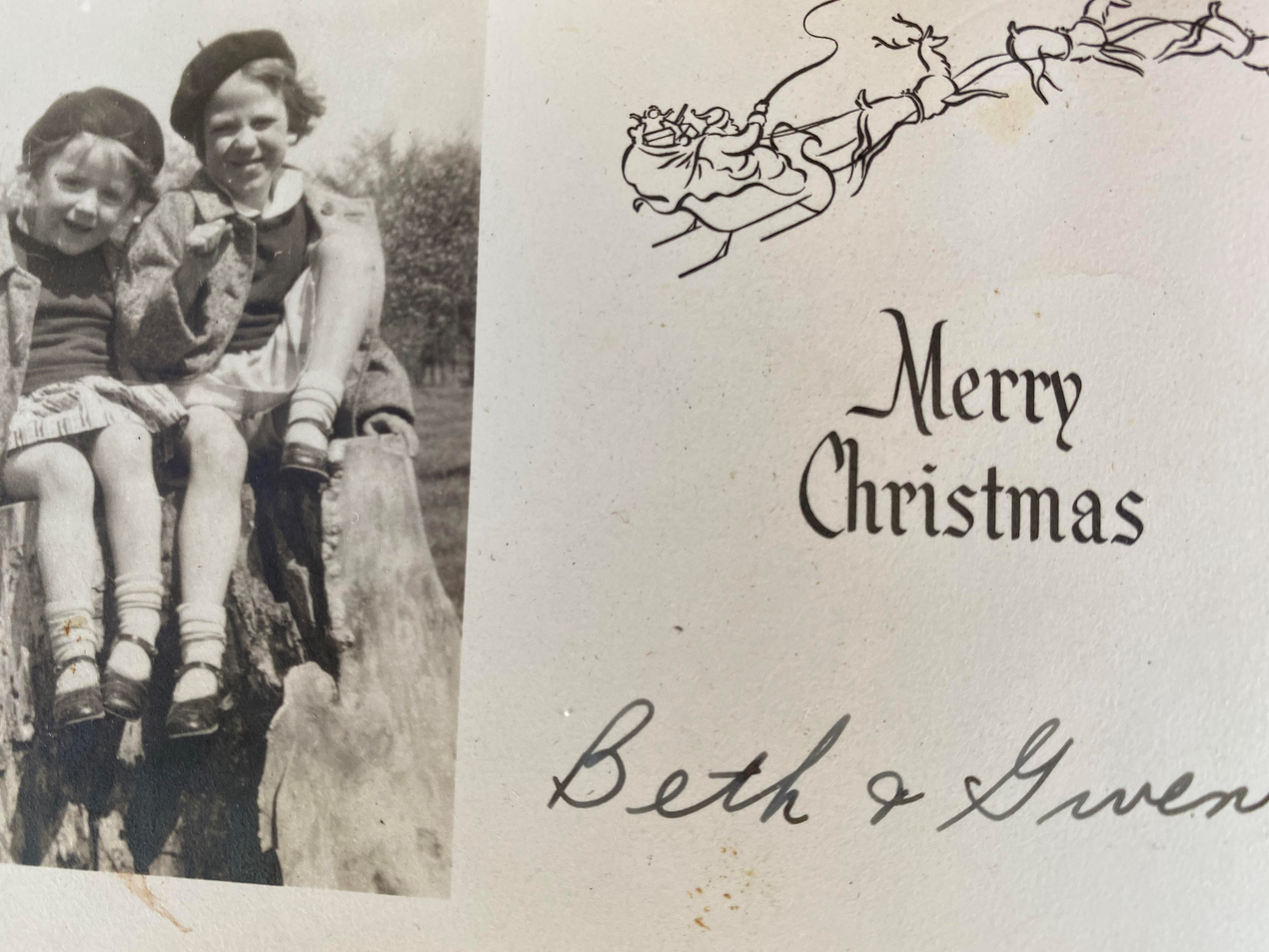
Mom (left) with Beth (right) sitting on a tree stump full of sugar and vinegar.
As mom grew into herself she made some wonderful friends, having a joyful fulfilling childhood. The photo of mom, a couple of high school friends flanking her on each side, standing on a stump with arms flexed shows just how spunky and spirited she was growing up; likely the same stump she had her Christmas picture taken years before with Beth. Both pictures expressing her fun-loving nature and confidence to take on the world.
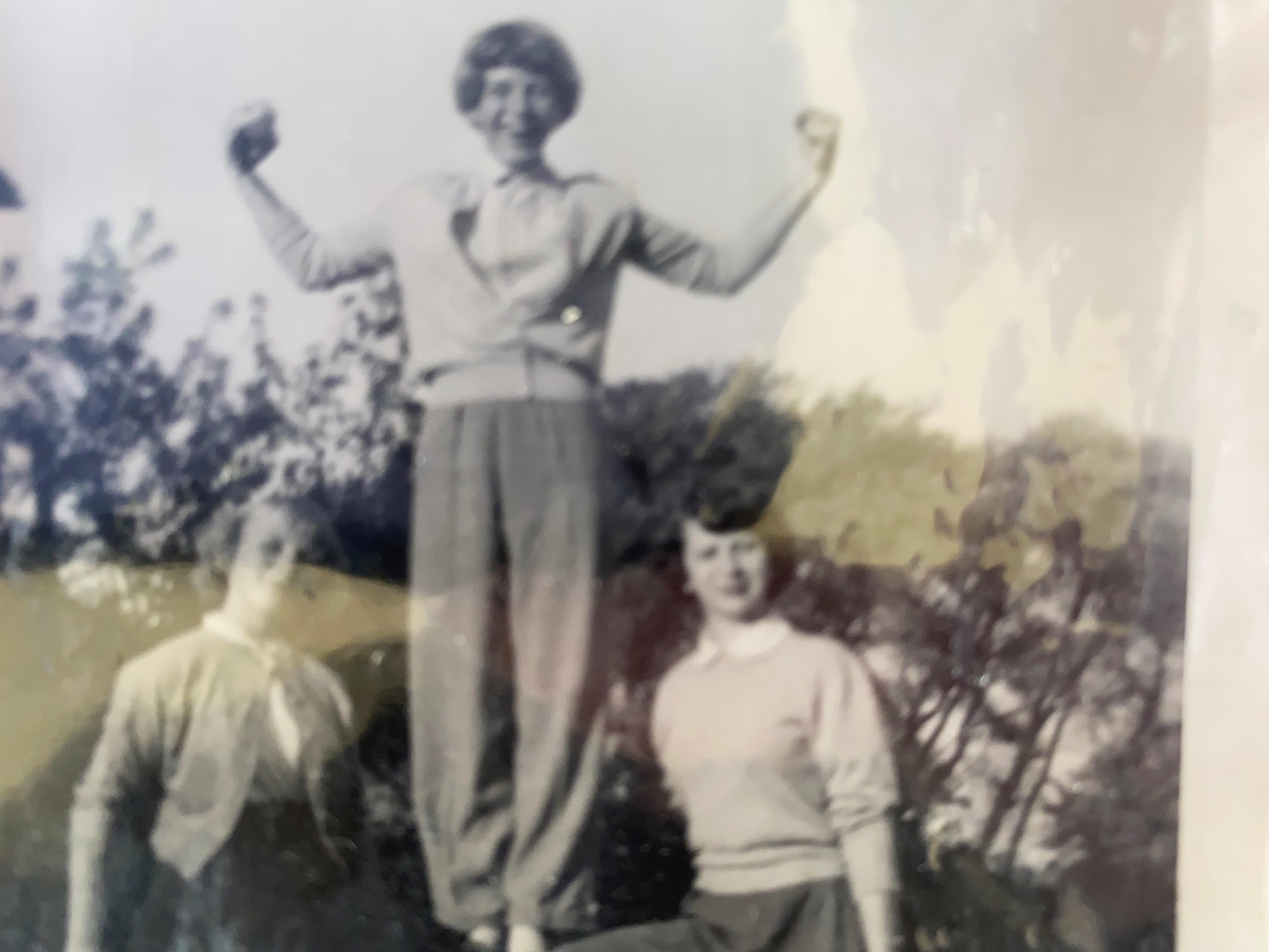
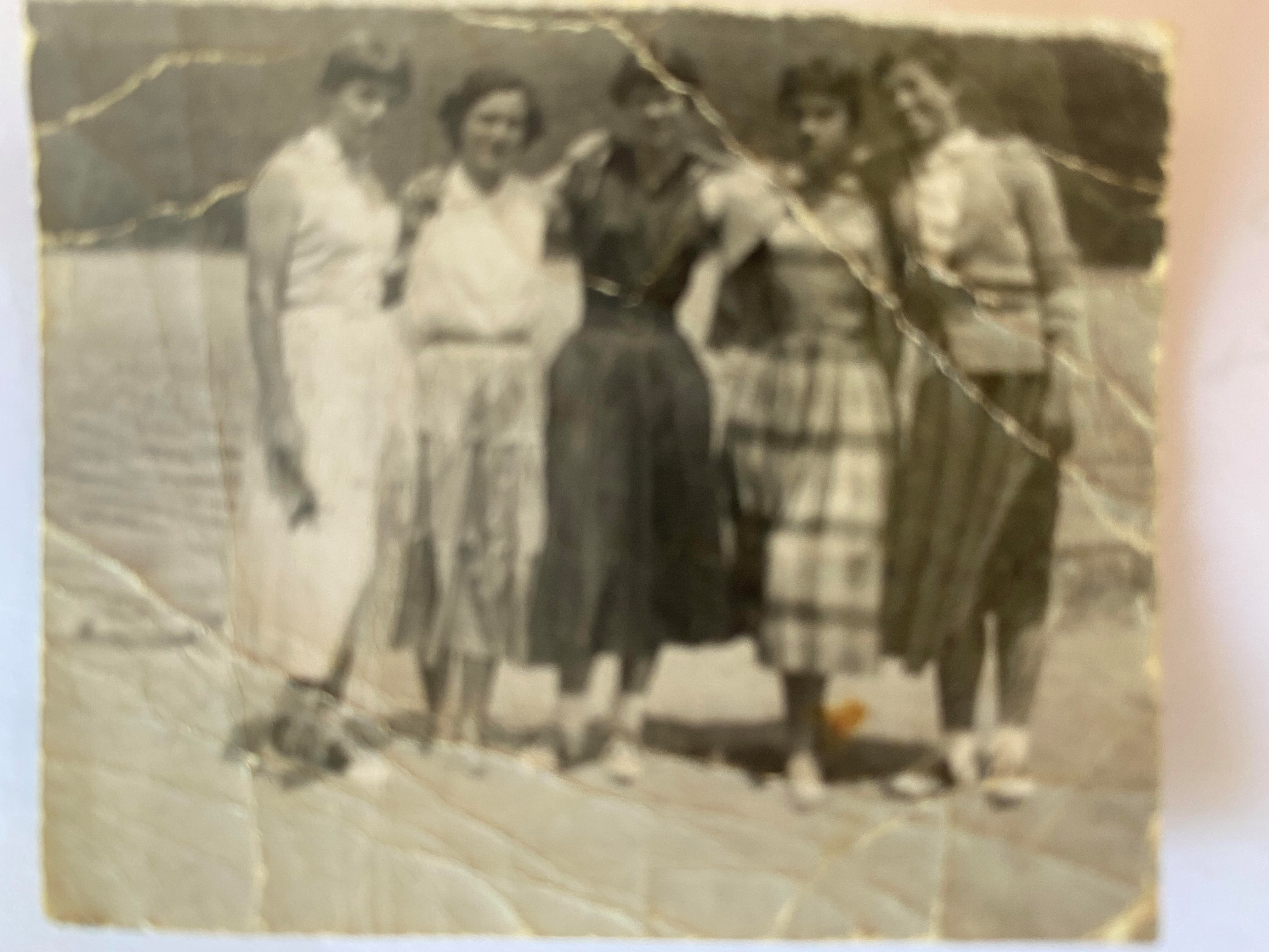
Gwen Briscoe standing tall above two childhood friends (left). Gwen with four friends not long before she married Danny Teevens (right)
It wasn’t long after high school when she met Daniel Joseph Teevens. My dad, who I am named after. He was a police officer ten years her senior. Age didn’t seem to matter. They fell in love and were determined to live a life together ‘until death do us part’. They married June 4th, ’59 in Arnprior at Saint John’s Chrysostom church. This is when mom became a wife, mother, hairdresser, Catholic, and a member of the Women’s Cursillo Movement, De Colores.
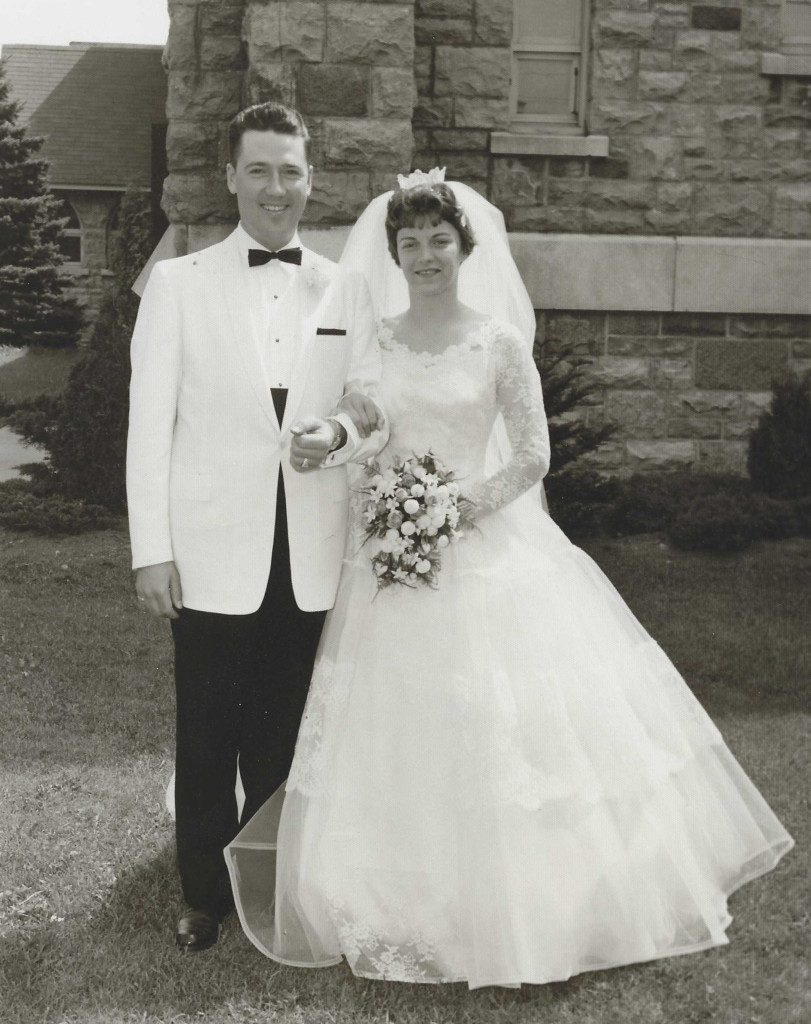
Daniel Joseph Teevens marries Gwenneth Ann Briscoe, 1959
Mom graduated from the women’s movement in the 35th class at the community-based center for Cursillistas. ‘Cursillo’ is Spanish for ‘little’ or ‘short’. Thus, the class being only for one weekend, beginning on a Thursday evening and ending late Sunday night. It was a memorable weekend as mom and the others in attendance lived together and listened to talks by priests or laity with the Eucharist being the central feature of the experience.
The purpose of De Colores was and is to live in Christian union with community – work, church, and neighborhoods. The heart of this movement is a springboard into mom’s life. A life of service. Care for mankind regardless of faith, creed, or race. Something mom did throughout her life. Truly a heart for those in need.
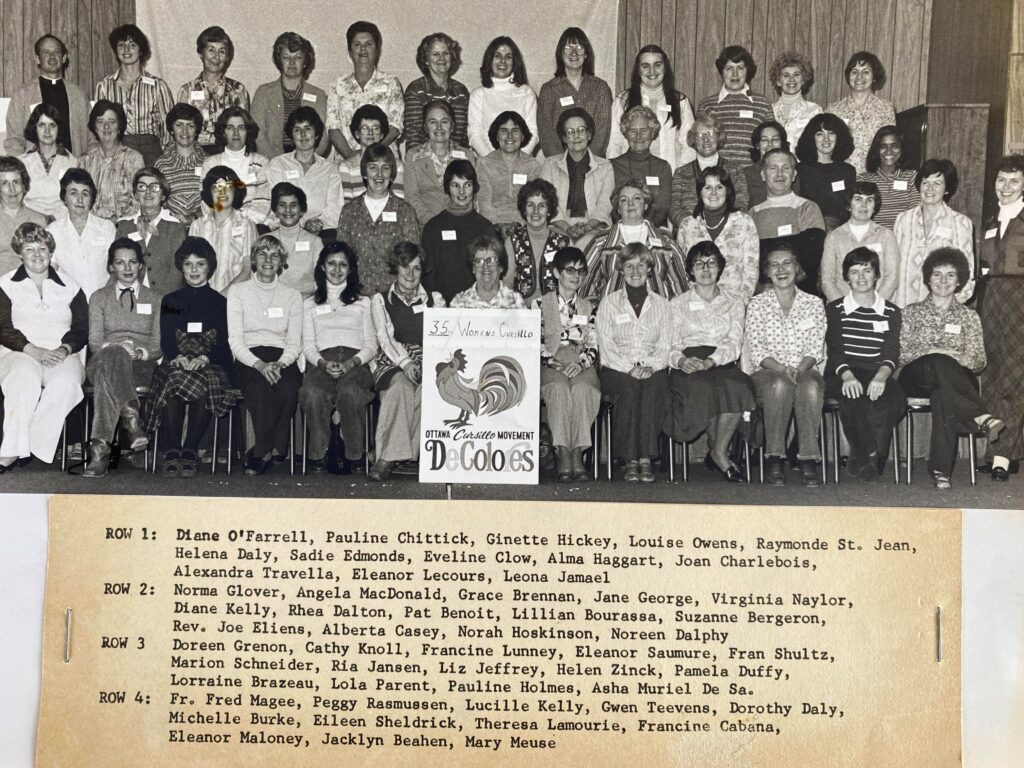
Gwen Teevens (back row, 4th from left) with 35th Women’s Cursillo ‘De Colores’ Movement.
Note: Next week’s post provides some history, context, joy, and pain as it relates to mom’s life with dad and us kids. Mom and dad became our heroes 👑
Take care, my friend 👍
